|
Shown below are the
web-based biographies of Abba Hillel Silver. Because some of these
documents require a password or registration to be viewed, the text has
been copied to this page.
Jewish Encyclopedia 2007
|
SILVER, ABBA (Abraham) HILLEL (1893–1963), U.S. Reform
rabbi, Zionist leader. Silver was born in Lithuania and
immigrated to the United States with his family in 1902. While
studying at Yeshivat Etz Chaim (later, the Rabbi Yitzhak
Elchanan Theological Seminary; see *Yeshiva University ), he
founded the Dr. Herzl Zion Club, a Hebrew-speaking group which
evolved into *Young Judaea , the first Zionist youth
organization in the U.S. He received a B.A. from the University
of Cincinnati in 1915 and was ordained the same year at *Hebrew
Union College , where he earned a D.D. in 1925. He was awarded
an honorary L.D. by (Case) Western Reserve University, an
honorary D.H.L. by Hebrew Union College, and an honorary D.H. by
the University of Tampa.
Following ordination, Silver became rabbi of Congregation Leshem
Shomayim in Wheeling, West Virginia (1915–17). In 1917, at the
age of 24, and in spite of his outspoken Zionism, he became
rabbi of The Temple (Congregation Tifereth Israel) in Cleveland,
Ohio, arguably the largest Reform congregation in the country.
Committed to the maintenance of basic Jewish tradition, he
installed a *Sefer Torah in the sanctuary's empty ark and moved
the temple's weekly Sabbath worship service from Sunday to
Saturday. He was instrumental in laying the groundwork for
replacing the Reform movement's Pittsburgh platform with the
1937 Columbus platform. Infused with the spirit of the prophets
of Israel, he denounced segregation and supported the right of
labor to organize. He resigned from the Cleveland Chamber of
Commerce over its anti-union policies and was a member of the
special state labor commission that drafted Ohio's first
unemployment insurance law. A self-appointed defender of the
Jewish people, Silver was the founder (with Samuel Untermayer,
and over the objections of some Jewish leaders) of the
Non-sectarian Anti-Nazi League to Champion Human Rights, which
organized a boycott of German goods in the 1930s.
Active in more than 30 local and national organizations, Silver
was the founding president of the Cleveland Bureau of Jewish
Education (1924–32); president of the Cleveland Jewish
Federation (1935–41); national chairman of the board of
governors of the State of Israel Bonds; national chairman of the
United Palestine Appeal (1938), and national co-chairman of the
United Jewish Appeal; president of the *Central Conference of
American Rabbis (1945–47); member of the board of governors of
*Hebrew University; president of the alumni association of
Hebrew Union College (1936–37), and chairman of its board of
alumni overseers (1952); and president (1957–58) and honorary
chairman (1945–46) of the *Zionist Organization of America .
A brilliant orator, Silver had the greatest impact and made his
most important contributions as a founding chairman of the
American Zionist Emergency Council (1943–45), and later as
chairman of the American section of the Jewish Agency (1946–49).
With the outbreak of World War II, he saw the opportunity to
achieve the goal of a Jewish state. Perceiving that the postwar
influence of the United States would be decisive, and winning
the support of its people and government crucial, he (together
with Stephen S. *Wise , although the two frequently clashed)
succeeded beyond expectations in mobilizing public opinion, both
Jewish and non-Jewish, on behalf of the Zionist cause. His
public and private eloquence resulted in the passage of
Congressional resolutions favoring the establishment of a Jewish
Commonwealth, as well as in commitments of support enunciated in
the Republican and Democratic Party platforms. The high point of
his Zionist leadership came on May 8, 1947, when he presented
the case for an independent Jewish state before the General
Assembly of the United Nations, which passed the Partition
Resolution on November 29 of that year, establishing the legal
basis for the creation of the state of Israel. He returned again
to the United Nations in May 1948 to announce that Israel had
declared itself an independent state. It has been speculated
that, had Chaim Weizmann not become the first president of
Israel, Silver – widely considered one of the architects of
modern Israel – might have been selected for that position. In
1950, a poll conducted by the National Jewish Post named him the
leading figure of American Jewry. In 1952, he gave the
benediction at the inauguration of President Dwight D.
Eisenhower.
Although internal rivalries led Silver to leave his official
posts in Zionist organizations, he constantly responded to
appeals for his service in fundraising or for the use of his
enormous prestige on behalf of Israel. Back in Ohio, he opposed
a 1958 "right-to-work" amendment to the state's constitution. He
was the recipient of many awards, including the Medal of Merit
from the Jewish War Veterans (1951), the National Human
Relations Award of the National Conference of Christians and
Jews, and the Louis Brandeis Award of the American Zionist
Council. The village Kefar Silver in Israel was named after him.
Silver's major
books are A History of Messianic Speculation in Israel
(1927), The Democratic Impulse in Jewish History (1928),
Religion in a Changing World (1931), Vision and
Victory (1949), Where Judaism Differed (1956),
Moses and the Original Torah (1961), and Therefore Choose
Life (1967), a selection of his sermons, addresses and
writings (edited by H. Weiner). Silver
died in his 45th year as rabbi of The Temple and was succeeded
by his son,
Daniel Jeremy Silver.
Source Citation (MLA
7th Edition)
Gordon,
Bezalel. "Silver, Abba (Abraham) Hillel."
Encyclopaedia Judaica. Ed. Michael Berenbaum and
Fred Skolnik. 2nd ed. Vol. 18. Detroit: Macmillan
Reference USA, 2007. 583-584. Gale Virtual Reference
Library. [868]
|
Read this biography on the Encyclopaedia
Judaica site.
Jewish Virtual
Library
Abba Hillel Silver
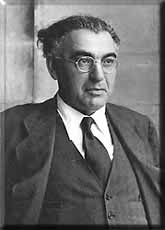
(1893-1963)
|
"Abba Hillel Silver was best known for his outstanding
leadership of the Zionist movement in America. Born in Lithuania in 1893,
Silver was raised in a highly traditional home in which Jewish scholarship
was strongly emphasized. In 1902 Silver's family arrived in New York City,
where Silver spent the rest of his youth. In New York, he became president
of the Herzl Zion Club, a Hebrew-speaking group which debated the Jewish
issues of the day.
Silver was ordained as a Reform rabbi in 1915 by the Hebrew Union College
in Cincinnati. After his first two years as a rabbi in Wheeling, West
Virginia, Silver was appointed rabbi at Congregation Tifereth Israel. This
Cleveland congregation was to remain his home for the remainder of his
career.
Silver held many different influential positions in organized Jewish life
in America. He was founder and co-chair of the United Jewish Appeal, and
president of the United Palestine Appeal. He served as the representative
of the American Zionist movement at Zionist Congresses. From 1945-1947,
Silver was president of the Zionist Organization of America. During that
same period, he was also president of the Central Conference of American
Rabbis (an American Jewish Reform organization).
Silver's skills as an orator were renowned. Whether he spoke about social
issues or on behalf of the Zionist cause, he captivated his audience. His
distinct influence was felt in many arenas. Although he himself identified
with the Republican party in the United States (an unusual position for an
American Jew at that time), he was respected by Democrats as well. Silver
was relentless in his pursuit of American governmental support for the
creation of a Jewish state. While many American Zionists claimed that Jews
should not pressure the American people and its government during wartime,
Silver boldly insisted that American public opinion must be mobilized to
achieve a state. Under his guidance, the American Zionist Emergency
Council was overwhelmingly successful in shaping American public opinion,
among both Jews and non-Jews. This strategy of outspokenness marked a new
era in Zionist politics, in which Jews began to express their opinions and
desires publicly.
Silver was also able to sway world opinion to favor the creation of a
Jewish state. It was he, in his capacity as chairman of the American
section of the Jewish Agency, who addressed the Assembly of the United
Nations for the Zionists. Several months later, in November 1947, the U.N.
announced its approval of partition and the establishment of the Jewish
state.
In addition to his work in the political arena, Silver was a prolific
writer. His sermons, articles, and books covered a range of topics
relating to issues of Jewish concern.
After the establishment of the State of Israel, Silver faced opposition
from within the Zionist movement. As a result, he was forced to relinquish
his leadership position, but remained a powerful and influential
spokesperson."
Copyright 2005 The American-Israeli Cooperative
Enterprise |
Read this biography on the
site of the Jewish Virtual Library.
American National Biography
The most extensive biography on the web is
from American National Biography, published by Oxford University.
Written by Rafael Medoff Ph.D., Director
of the
David S. Wyman
Institute for Holocaust Studies.
1,400+ words
|
"Silver,
Abba Hillel (28 Jan. 1893-28 Nov. 1963), rabbi and Zionist leader, was
born Abraham Silver in the Lithuanian village of Neustadt-Schirwindt, the
son of Rabbi Moses Silver, a proprietor of a soap business, and Dina
Seaman. The family immigrated to the United States in stages, settling on
New York City's Lower East Side in 1902, when Silver was nine years old.
He attended public school in the mornings and Jewish religious seminaries
in the afternoons yet still made time for his growing interest in the
fledgling Zionist movement. He and his brother Maxwell founded the Dr.
Herzl Zion Club, one of the first Zionist youth groups in America, in
1904. On Friday evenings, Silver attended the mesmerizing lectures of Zvi Hirsch Masliansky, the most influential
Zionist preacher of that era. "I can still taste the sweet honey of his
words," Silver remarked many years later. Inspired by Masliansky, Silver
soon developed a reputation of his own as an orator, equally eloquent in
Yiddish, Hebrew, and English. He addressed the national Federation of
American Zionists convention when he was just fourteen.
During his
high school years, Silver excelled in secular studies and increasingly
moved away from his Orthodox religious upbringing. Upon graduation, in
1911, he enrolled at the University of Cincinnati and the Hebrew Union
College, the rabbinical seminary of Reform Judaism. He was not fazed by
the Reform movement's anti-Zionism; indeed, it may have whetted his
appetite. He organized Zionist activity on campus, edited student
publications, won prizes in public speaking contests, and graduated in
1915 as valedictorian of his class.
At his
first pulpit, in Wheeling, West Virginia, Silver soon earned a local and
regional reputation as an orator. He also earned the enmity of more than a
few Wheeling residents by his involvement in controversial causes,
especially his sponsorship of a lecture in 1917 by Senator Robert M. La
Follette, who opposed U.S. entry into World War I. That summer, Silver was
lured away from Wheeling to Cleveland, Ohio, to become the spiritual
leader of the Temple (Tifereth Israel), one of the country's most
prominent Reform congregations. In Cleveland he continued to attract
public attention, usually as an outspoken defender of labor unions, and
frequently sparred with groups such as the Daughters of the American
Revolution, which denounced him as a dangerous radical.
Still, it
was the cause of Zionism that was closest to Silver's heart, reinvigorated
by a visit to British-administered Palestine in the summer of 1919. Soon
he was speaking throughout the United States on behalf of the Zionist
movement, attracting large audiences and rave reviews. "Many who heard him
last night pronounced him as one of the greatest orators the Jews
possess," a newspaper in Texas declared after one of Silver's addresses.
In 1923 he married Virginia Horkheimer; they had two sons. While two
assistant rabbis handled the bulk of the Temple's routine rabbinical
duties, Silver rose to prominence on the national Jewish scene. As leader
of Cleveland's Zionists - who comprised one of the largest districts of
the Zionist Organization of America (ZOA) - he spearheaded protests
against British restrictions on Jewish immigration to Palestine and
organized boycotts of products from Nazi Germany.
The
escalating Nazi persecution of Jews, the apathetic response of the
Roosevelt administration to news of Hitler's atrocities, and England's
refusal to open Palestine to refugees from Hitler, stimulated a mood of
growing militancy in the American Jewish community during the late 1930s
and early 1940s. Silver both symbolized American Jewish militancy and
helped encourage its spread. In August 1943, he was appointed co-chair of
the American Zionist Emergency Council (AZEC), a coalition of the leading
U.S. Zionist groups, alongside Rabbi Stephen Wise. Until then Wise had
been widely regarded as the most powerful leader of the American Jewish
community. Silver's elevation to the co-chairmanship of AZEC launched a
bitter political and personal rivalry between the two men that would
endure for years.
While Wise,
a loyal Democrat, was reluctant to criticize the Roosevelt
administration's hands-off attitude toward Palestine and European Jewry,
Silver did not hesitate to speak his mind. Silver's followers
characterized the contrast between the two as "Aggressive Zionism" versus
"the Politics of the Green Light [from the White House]." Within weeks of
assuming the AZEC co-chairmanship, Silver spoiled Wise's plan to downplay
the Palestine issue at that year's American Jewish Conference. Wise had
hoped to mollify Washington and London, as well as Jewish critics of
Zionism, by skirting the Jewish statehood issue, but Silver electrified
the delegates with an unannounced address in which he vigorously demanded
Jewish national independence. The "thunderous applause" that greeted his
speech said as much about Silver's new prominence as it did about the
American Jewish mood.
Under
Silver's leadership, American Zionism assumed a vocal new role in
Washington, D.C. Mobilized by AZEC, grassroots Zionists deluged Capitol
Hill with calls and letters in early 1943 and late 1944, urging the
passage of a congressional resolution declaring U.S. support for creation
of a Jewish national home in Palestine. The opposition of the War and
State Departments stalled the resolution in committee but did not deter
Silver from campaigning in the summer of 1944 for the inclusion of
pro-Zionist planks in the election platforms of the Republican and
Democratic parties that summer. Silver's ability to maneuver the two
parties into competition for Jewish electoral support was a testimony to
his political sophistication even if, much to Wise's chagrin, the
Republican platform went beyond what AZEC requested by denouncing FDR for
not challenging England's pro-Arab tilt in Palestine.
While
successfully usurping Wise's leadership role in the Jewish community,
Silver took care to guard his own right flank. He quietly hired several
militant Revisionist Zionists to help shape AZEC policy and guide its
public information campaigns. He also engineered a public reconciliation
between the Revisionists' U.S. wing and the mainstream Zionist movement.
During the
postwar period, Silver and AZEC stepped up their pressure on the Truman
administration with a fresh barrage of protest rallies, newspaper
advertisements, and educational campaigns. Silver's effort in early 1946
to link postwar U.S. loans to British policy in Palestine collapsed when
Wise broke ranks to lobby against linkage. More successful were Silver's
behind-the-scenes efforts to mobilize non-Jewish Americans on behalf of
the Zionist cause. AZEC sponsored the American Christian Palestine
Committee, which activated grassroots Christian Zionists nationwide, and
the Christian Council on Palestine, which spoke for nearly 3,000
pro-Zionist Christian clergymen.
Although
the Truman administration wavered in its support for the 1947 United
Nations plan to partition Palestine into Jewish and Arab states, a torrent
of protest activity spearheaded by Silver and AZEC helped convince the
president to recognize the new State of Israel just minutes after its
creation. Silver's protests against the U.S. arms embargo on the Middle
East, however, were consistently rebuffed by the administration.
In the
aftermath of Israel's birth, Silver pressed for a clear separation between
the new state and the Zionist movement, insisting that Israel should not
control the World Zionist Organization or other Diaspora agencies. The
leaders of the ruling Israeli Labor party had always viewed Silver with
some suspicion because he preferred the free market advocates of the
General Zionist party to the socialists of Labor. His effort to break
Israeli hegemony over the Diaspora enraged Prime Minister David
Ben-Gurion. The Labor leadership threw its support behind a faction of
disgruntled ZOA members who resented Silver's prominence, and together
they forced Silver and his followers from power in 1949.
Silver
resumed full-time rabbinical duties at the Temple, with only an occasional
and brief foray into the political arena when he could utilize his
Republican contacts to lobby on Israel's behalf. He turned his attention
to religious scholarship, reading voraciously and authoring several
well-received books on Judaism. He died suddenly at a family Thanksgiving
celebration in Cleveland.
Silver's
reign marked a political coming of age for American Jewry. His lobbying
victories infused the Jewish community with confidence and a sense that
their agenda was a legitimate part of American political culture--no mean
feat for a community comprised largely of immigrants and children of
immigrants. The Silver years left their mark on the American political
scene as well. After the inclusion of Palestine in the 1944 party
platforms, Zionist concerns assumed a permanent place in American
electoral politics. Additionally, the swift U.S. recognition of Israel in
1948, a decision made, in large measure, with an eye toward American
Jewish opinion, was a first major step in cementing the America-Israel
friendship that has endured ever since."
Rafael Medoff
Copyright Notice
Permission is granted to make and distribute verbatim copies of the
American National Biography of the Day and Sample Biographies provided
that the following statement is preserved on all copies:
From American National Biography, published by Oxford University
Press, Inc., copyright 2000 American Council of Learned Societies. |
For our page on Reverend Zvi Hirsch Masliansky,
said to have inspired the young Abraham Silver,
click here.
Rabbi Leon Feuer's Personal Memoir
As a college freshman, Leon Feuer, whose
family were members of The Temple, was encouraged by Abba Hillel Silver to attend Hebrew Union College. Upon Feuer's ordination in
1927,
Silver named him to be his first Assistant Rabbi. He served until
January 1935, leaving to lead a congregation in Toledo. Feuer also
served as Silver's aide
during the years (1943-45) of the battle for the establishment of the
State of Israel. His last service to Silver was to recite the Kaddish at
Silver's funeral in 1963. His 20 page memoir
on Silver, published in the November 1967 issue of the Journal of the
American Jewish Archives, is a sensitive and revealing document. In my
view, it is a "must read".
Read Feuer's memoir on the American Jewish
Archives site. (pdf)
Last revised 11/2013
|
