|
|
THE TEMPLE - TIFERETH ISRAEL | |
|
|
THE TEMPLE - TIFERETH ISRAEL | |
|
Tifereth Israel (The
Temple) For more on the congregation's history,
see Dancyger.
In 1873 Tifereth Israel became one of the original members of
the Union of American Hebrew Congregations (now the
Union for Reform Judaism).
The prayer book Minhag Amerika (the American rite) by
Rabbi Isaac Mayer Wise was adopted.
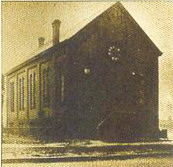
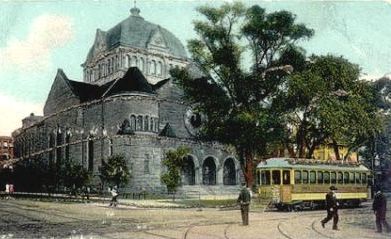
In 1894, as the Jewish community moved steadily eastward (a trend which is still ongoing), Tifereth Israel moved three miles east to the southeast corner of Willson Avenue (now East 55th Street) and Central Avenue. It was called "The Willson Avenue Temple" and then simply "The Temple."
From a picture postcard titled "Wilson
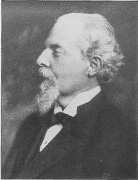
(sic) Avenue Jewish Temple" Dancyger (13) writes of a dispute during the design of the new building. Would the sanctuary have an Ark for the Torah scrolls? Gries did not want one; the Board did. The compromise was to build the Ark, but each week Moses Gries would read from an English Bible and leave the Torah scrolls in the Ark. Rabbi Gries initiated more changes that would take the Temple to the forefront (some would say to the periphery) of Classic Reform Judaism. The congregation adopted the Union Prayer Book, Hebrew was dropped from the Sunday school curriculum and from much of the religious service, and the main weekly service was moved to Sunday. In 1896 Confirmation ceremonies would begin. We should note that the Torah Scrolls were used in those ceremonies. (Learn more about Confirmation ceremonies at The Temple over four generations.) In 1900, on its 50th anniversary, the Temple had a membership of 476 families and was one of the nation's largest and best known Reform congregations. In 1916 Rabbi Gries, in poor health, announced that he would be leaving The Temple the following year. The congregation, now more than 700 families, began to search for his successor. For more on the Gries years and the search for his successor, click here. |
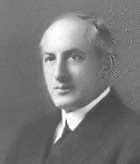
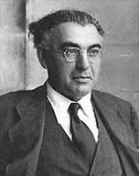
Rabbi Abba Hillel Silver
Comes to Cleveland
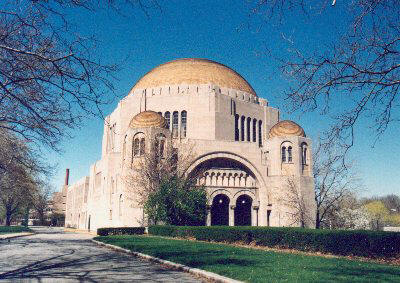
His sermons eloquently displayed his extraordinary scholarship, concern for social justice and commitment to a homeland for the Jewish people. They attracted many non-Jewish visitors and would often be reported in Cleveland's newspapers. He continued the custom of Sunday morning services, but restored the teaching of Hebrew in the Temple's school. Three years after Abba Hillel Silver became its rabbi, The Temple began to build a new home, two miles east, in University Circle. It moved to this location in 1924 and took its place in a square-mile area that was to became the home of more than 50 educational, cultural and religious institutions. For a full page on the University Circle Temple, click here.
Though many (perhaps most) of its membership were not Zionists, The Temple gave Abba Hillel Silver freedom to pursue Zionist activities. Members came to accept his absences and to take pride in his accomplishments. In 1947 it made an important contribution to the Zionist cause, granting Abba Hillel Silver an indefinite leave of absence. He could now devote all his energies to the decisions at the UN. In 1948 about 100 member households, many from some of The Temple's oldest families left to start a suburban congregation. But the Temple kept growing and by the late 1950s its membership stood at more than 2,000 households. (Dancyger, 38)
|
|||||||||||||||
|
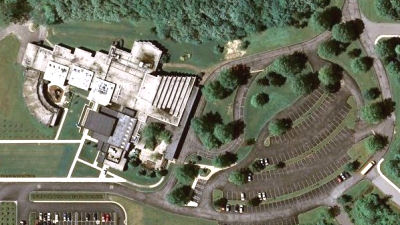
The Temple - Tifereth Israel Today The Temple was the last of the large Jewish congregations to move outside the city limits, to the suburbs. In 1964, as many younger Jewish families moved farther east beyond the inner-ring suburbs, it built what it called a 'branch' in Beachwood, six miles east of its University Circle location. Now, nearly 50 years later, this building, much expanded, is the home for nearly all congregational activities.
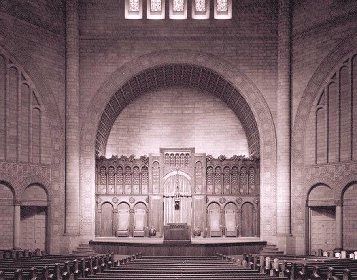
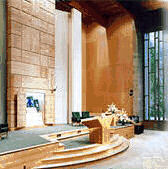
But the congregation still owns the old building at University Circle, now listed on the National Register of Historic Places. The Silver Sanctuary is used on the High Holy Days and for life cycle events and meetings. The building also houses the Temple Museum of Religious Art. In March 2010 the building was given to Case Western Reserve University to become the Maltz Center for Performing Arts. more ... The congregation is now "The Temple - Tifereth Israel", combining the two names it has been known by over the years.
|
|||||||||||